
🔴 Non-Veg / Contains Chicken & Soy | 🥘 Main Course / Japanese Cuisine
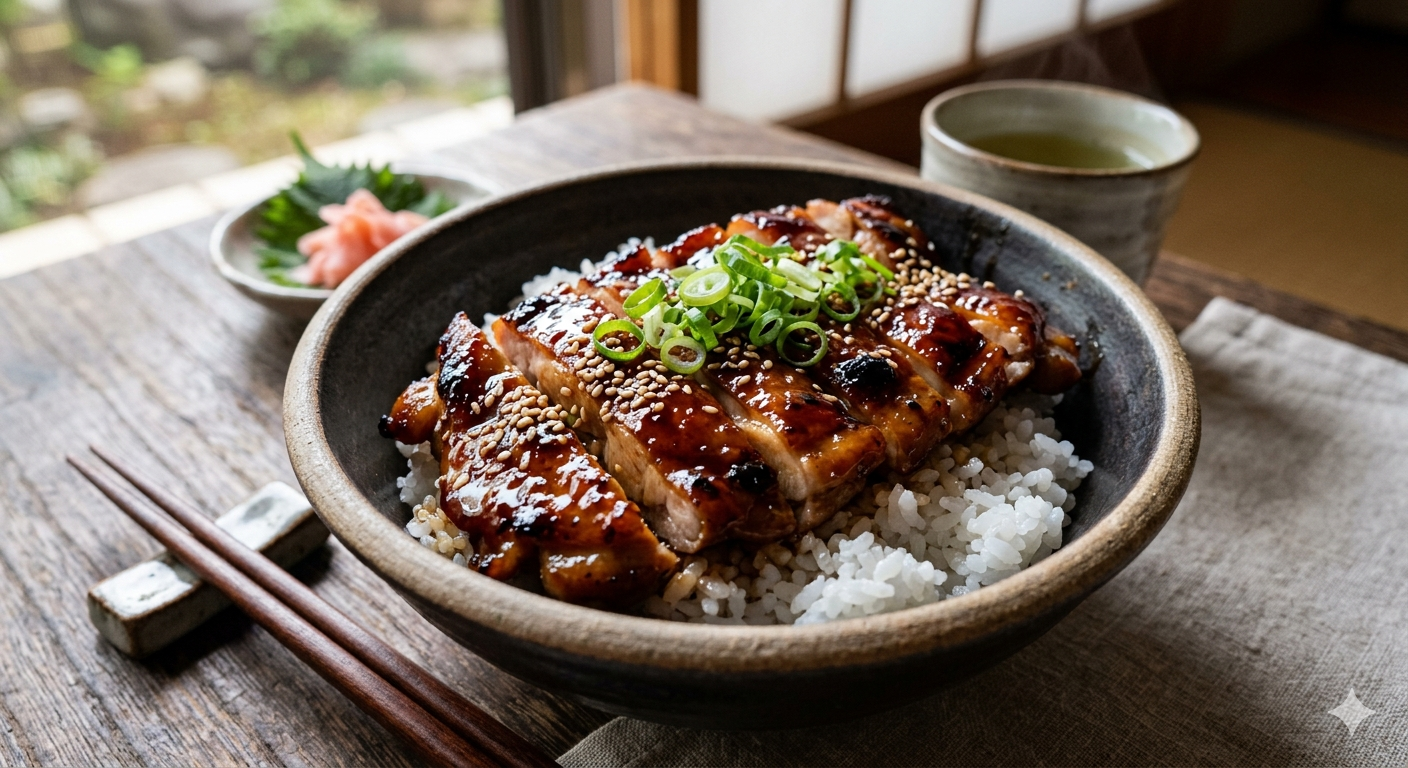
In the West, “Teriyaki” is often associated with a thick, overly sweet, sticky bottled marinade. But in Japan, authentic Teriyaki is actually a cooking technique (“Teri” means luster/shine, and “Yaki” means grilled/pan-fried). At Aambu Rasoee, we are bringing you the traditional method. There is no marinating required, and no cornstarch needed! The magic happens in the pan, where a simple 4-ingredient sauce reduces with the natural juices of the chicken to create a breathtakingly beautiful, savory, and sweet glaze.
📊 Nutrition Information (Per Serving)
| Nutrient | Amount |
|---|---|
| Calories | 450 kcal |
| Protein | 35.0 g |
| Fiber | 1.0 g |
| Total Fat | 18.0 g |
🛒 Detailed Ingredients
1. The Chicken:
- Chicken Thighs: 500g (Boneless, but skin-on is absolutely crucial for authentic flavor and texture)
- Salt: A tiny pinch
- Neutral Oil: 1 tsp (Just to lightly grease the pan)
2. The Golden Ratio Teriyaki Sauce (Tare):
- Soy Sauce: 2 tbsp (Use high-quality Japanese soy sauce like Kikkoman)
- Mirin: 2 tbsp (Japanese sweet cooking rice wine)
- Sake: 2 tbsp (Japanese cooking sake)
- Sugar: 1 tbsp (Granulated white or light brown)
3. To Serve & Garnish:
- Steamed White Rice: 2 bowls (Short-grain sushi rice is best)
- Green Onions (Scallions): 1 stalk (Finely sliced)
- Toasted Sesame Seeds: 1 tsp
- Steamed Broccoli or Greens: Optional, for a complete meal
👩🍳 Preparation & Cooking Instructions
Step 1: Prepping the Chicken
- Pat the chicken thighs completely dry with a paper towel. Moisture is the enemy of a crispy sear!
- Using the tip of a sharp knife or a fork, poke several holes into the chicken skin. This prevents the skin from shrinking rapidly in the pan and helps the fat render out perfectly.
- Lightly sprinkle the meat side (not the skin side) with a tiny bit of salt.
Step 2: Mixing the Authentic Glaze
In a small bowl, whisk together the soy sauce, mirin, sake, and sugar until the sugar is mostly dissolved. Set this aside.
Step 3: The Pan-Fry (Rendering the Fat)
- Heat a large skillet (non-stick or cast iron) over medium-high heat. Add just 1 teaspoon of neutral oil.
- Place the chicken thighs in the pan skin-side down. Press them flat with a spatula.
- Let them cook undisturbed for 5-7 minutes. The fat from the skin will melt (render) into the pan, and the skin will turn a beautiful, crispy golden brown.
- Flip the chicken and cook for another 3-4 minutes on the other side until cooked through.
Step 4: The Teriyaki Glazing Technique
- CRITICAL STEP: Before adding the sauce, take a folded paper towel and wipe away almost all the excess chicken fat from the pan. If you leave the fat, your sauce will become greasy and won’t stick to the chicken.
- Pour your prepared Teriyaki sauce mixture directly into the hot pan over the chicken.
- The sauce will immediately start bubbling. Turn the heat down to medium.
- As the sauce reduces and thickens, use a spoon to continuously baste (pour) the bubbling liquid over the top of the chicken.
- Cook for 2-3 minutes until the sauce transforms into a thick, syrupy glaze that coats the chicken with a mirror-like shine. Turn off the heat.
Step 5: Slice and Serve
Remove the chicken to a cutting board. Let it rest for 2 minutes, then slice it into thick strips. Place the slices over a bowl of warm steamed rice. Drizzle any remaining sticky glaze from the pan over the chicken and rice. Garnish with sesame seeds and green onions!
❓ Frequently Asked Questions (FAQ)
Q: Do I really need to use chicken with the skin on?
A: Yes! Authentic Japanese teriyaki relies on pan-frying the skin until it’s crispy and using the rendered chicken fat to flavor the dish. Skinless chicken breasts will dry out quickly and won’t have the same rich flavor.
Q: I don’t consume alcohol. Can I substitute the Sake and Mirin?
A: Sake and Mirin are the soul of Teriyaki, providing depth, sweetness, and that signature glossy shine. However, for a non-alcoholic version, you can substitute the Sake with water + a splash of rice vinegar, and the Mirin with extra water and an extra tablespoon of sugar.
Q: Why don’t we marinate the chicken in the sauce first?
A: Marinating makes the chicken wet, which means it will steam in the pan instead of getting a crispy sear. Traditional Teriyaki is always a glaze applied at the very end of cooking!
💡 Aambu Blog Secret Tip
”When the sauce is bubbling in the pan, watch it very closely! Because of the high sugar content in the Mirin and the added sugar, it goes from a perfect, thick syrup to burnt and bitter in a matter of seconds. The moment it coats the back of a spoon and leaves a clear trail when you swipe a spatula through the pan, take it off the heat immediately!”