

🟢 Veg / Contains Dairy & Gluten | 🥘 Appetizer or Main / Iranian (Persian) Cuisine
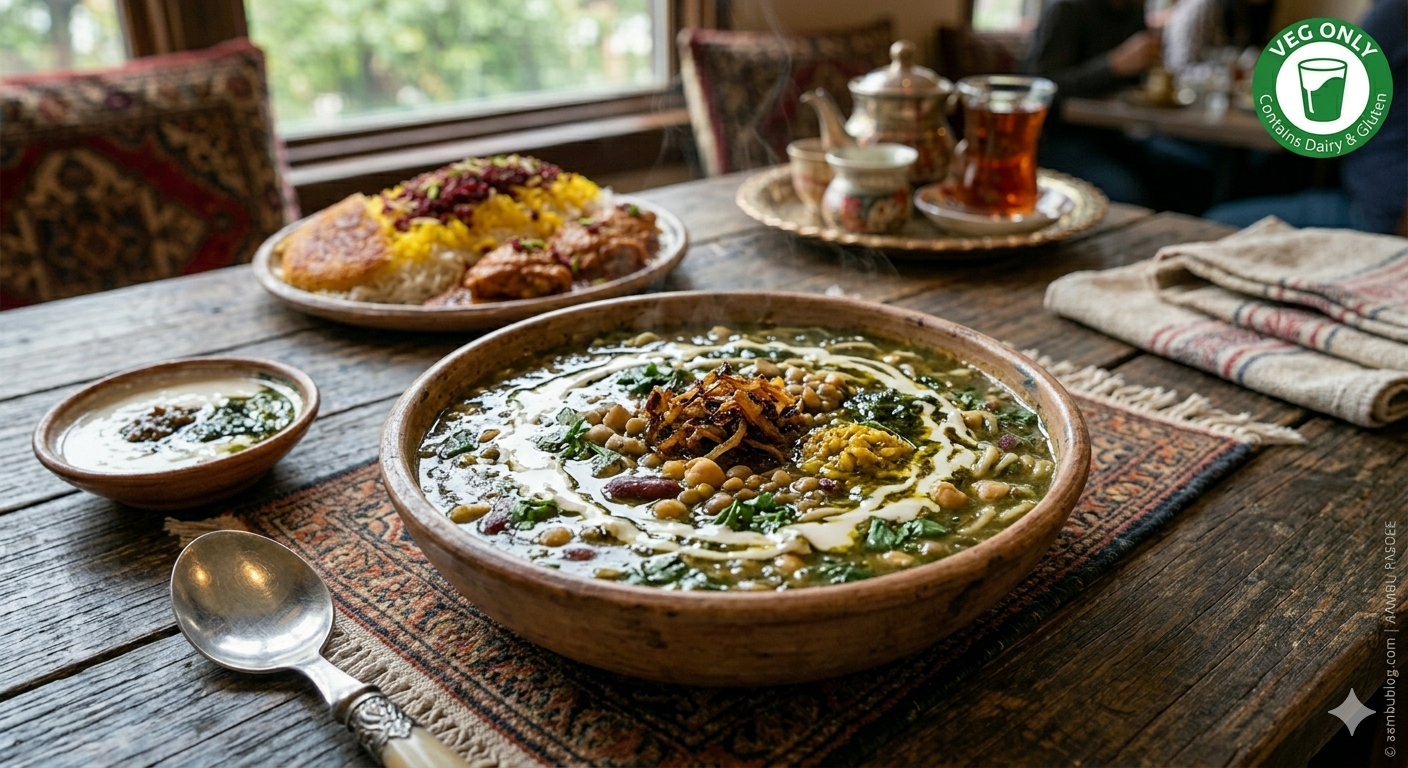
Ash-e Reshteh is more than just a soup; it is a ritual. The word “Ash” means thick soup, and “Reshteh” refers to the thin wheat noodles that symbolize the many paths of life. It is packed with a massive amount of fresh herbs, diverse legumes, and topped with the unique, tangy Kashk (fermented whey). At AAMBU RASOEE, we believe the secret to a great Ash is the “Nana Dagh”—the sizzling mint and garlic oil that brings the whole bowl to life.
📊 Nutrition Information (Per Hearty Bowl)
| Nutrient | Amount |
|---|---|
| Calories | 380 kcal |
| Protein | 18.0 g |
| Fiber | 12.0 g |
| Total Fat | 14.0 g |
🛒 Detailed Ingredients
1. The “Sabzi” (Herb Mix):
- Spinach: 2 cups (Chopped).
- Parsley: 1 cup (Finely minced).
- Cilantro: 1 cup (Finely minced).
- Scallions (Green Onions): 1/2 cup (Chopped).
2. The Legumes & Noodles:
- Chickpeas: 1/2 cup (Cooked or canned).
- Kidney Beans: 1/2 cup (Cooked or canned).
- Green Lentils: 1/2 cup (Raw).
- Reshteh Noodles: 200g (Flat Persian wheat noodles; can substitute with linguine if needed).
3. The Base & Flavor:
- Onions: 2 large (Thinly sliced for “Piaz Dagh”).
- Garlic: 4 cloves (Minced).
- Turmeric: 1 tsp.
- Kashk: 1/2 cup (Liquid fermented whey; substitute with sour cream or Greek yogurt mixed with lemon).
- Dried Mint: 2 tbsp.
👩🍳 Preparation & Cooking Instructions
Step 1: The Legume Foundation
- In a large pot, add the lentils and 6 cups of water. Bring to a boil, then simmer for 15 minutes.
- Add the pre-cooked chickpeas and kidney beans to the pot.
Step 2: The Herb Infusion
- Add the massive pile of chopped herbs (spinach, parsley, cilantro, and scallions) to the pot.
- Stir well and let the herbs cook down with the legumes for about 20 minutes. The soup will turn a vibrant, deep green.
Step 3: The Path of Life (Noodles)
- Break the Reshteh noodles in half and add them to the boiling soup.
- Important: The noodles contain a lot of salt, so do not add any extra salt to the soup until the very end after tasting.
- Simmer for 10–15 minutes. The starch from the noodles will naturally thicken the soup into a rich, velvety consistency.
Step 4: The Triple Garnish (The Soul of the Dish)
While the soup simmers, prepare the toppings in three separate small pans:
- Piaz Dagh: Sauté sliced onions in oil until they are dark golden and crispy.
- Sir Dagh: Sauté minced garlic with a pinch of turmeric for only 30 seconds until fragrant.
- Nana Dagh: Heat 3 tbsp of oil, turn off the heat, and immediately stir in the dried mint. It should sizzle but not burn.
Step 5: The Finishing Touch
- Stir half of the Kashk (whey) into the soup pot.
- Ladle the thick soup into bowls. Top with a swirl of the remaining Kashk, and decorative dollops of the crispy onions, garlic, and mint oil.
❓ Frequently Asked Questions (FAQ)
Q: I can’t find Reshteh noodles. What can I use?
A: Use standard Italian Linguine or Fettuccine broken into thirds. However, you will need to add a bit more salt to the soup, as traditional Reshteh is very salty.
Q: What exactly is Kashk?
A: Kashk is a fermented, drained yogurt product with a unique salty and funky tang. If you can’t find it, mix 1/2 cup of Greek yogurt with 1 teaspoon of lemon juice and a pinch of salt.
Q: Can I make this in a slow cooker?
A: Yes, but add the noodles and the fresh herbs only in the last 30 minutes of cooking to ensure they don’t lose their color and texture.
💡 Secret Tip
”The secret to a world-class Ash-e Reshteh is the ‘Oil Sizzle.’ Never skip the Nana Dagh (mint oil). The combination of the hot oil hitting the cold Kashk garnish creates a marbled effect that is the signature look of a Persian grandmother’s kitchen!”